Smart Tax Strategy for Business Owners
Taxes don’t have to be a reactive burden for business owners. This post breaks down why proactive tax strategy matters, highlighting smart planning moves that can improve cash flow, reduce surprises, and align tax decisions with long-term business and personal goals.
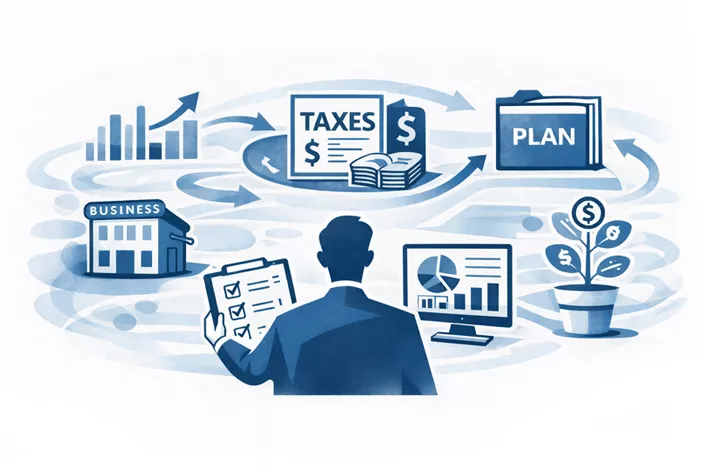
How proactive planning can reduce exposure, improve cash flow, and support long-term growth
For business owners, taxes are often viewed as a fixed cost—something calculated after the year ends and paid with little room for adjustment. In reality, taxes are one of the most controllable variables in a business when approached strategically.
A smart tax strategy isn’t about aggressive shortcuts or last-minute moves. It’s about proactive planning, thoughtful coordination, and aligning tax decisions with broader business goals. When done correctly, tax planning becomes a powerful lever for improving cash flow and supporting sustainable growth.
Why Reactive Tax Planning Falls Short
Many businesses operate in reaction mode—filing returns, addressing issues as they arise, and making decisions without considering downstream tax effects. This approach often leads to:
- Missed deductions and credits
- Inefficient entity structures
- Poor timing of income and expenses
- Unexpected tax liabilities that strain cash flow
Once the year closes, most planning opportunities are gone. Proactive strategy shifts the focus forward—before decisions are locked in.
Reducing Tax Exposure Through Structure and Timing
Entity Selection and Optimization
Choosing (and periodically revisiting) the right entity structure—LLC, S corporation, partnership, or C corporation—can materially affect tax liability, payroll taxes, and flexibility for future growth.
Income and Expense Timing
Strategic acceleration or deferral of income and expenses can smooth taxable income, manage marginal tax brackets, and reduce volatility in tax payments—especially during high-growth periods.
Compensation Planning
How owners are paid—salary, distributions, bonuses, or benefits—directly affects both business taxes and personal cash flow. Proper structuring balances compliance with efficiency.
Improving Cash Flow With Intentional Tax Planning
Taxes don’t just affect profitability—they affect liquidity. Smart planning can help business owners:
- Reduce quarterly estimated tax surprises
- Align tax payments with cash inflows
- Preserve working capital during expansion phases
- Plan for large obligations without disrupting operations
Improved cash flow provides flexibility—whether that means hiring talent, investing in equipment, or navigating slower cycles with confidence.
Supporting Long-Term Growth and Exit Planning
Tax strategy should evolve with the business lifecycle. As businesses scale, proactive planning supports:
- Capital investment decisions
- Multi-state or international expansion
- Ownership transitions or buy-sell agreements
- Eventual sale or succession planning
Decisions made years in advance often determine how much value owners ultimately keep when a business transitions or exits.
Coordination Matters More Than Complexity
Effective tax strategy isn’t about complexity for its own sake. It’s about coordination—aligning tax planning with accounting, cash flow management, investment decisions, and long-term objectives.
Staying compliant with evolving guidance from organizations like the Internal Revenue Service is essential, but true value comes from planning that goes beyond compliance and integrates tax strategy into everyday business decisions.
Turning Taxes Into a Strategic Advantage
For business owners, taxes are unavoidable—but overpaying or being unprepared is not. With proactive planning, taxes can shift from a reactive burden to a strategic advantage that supports growth, resilience, and long-term success. The most effective strategies are built early, reviewed often, and adjusted as the business evolves—long before deadlines force decisions.
More Topics
Financial Insights Business ServicesFinancial ForecastingFinancial PlanningTax PreparationWealth ManagementStart with a Complimentary Conversation
A no-cost discussion to understand your goals, evaluate your current strategy, and outline next steps.
Schedule a Complimentary Call